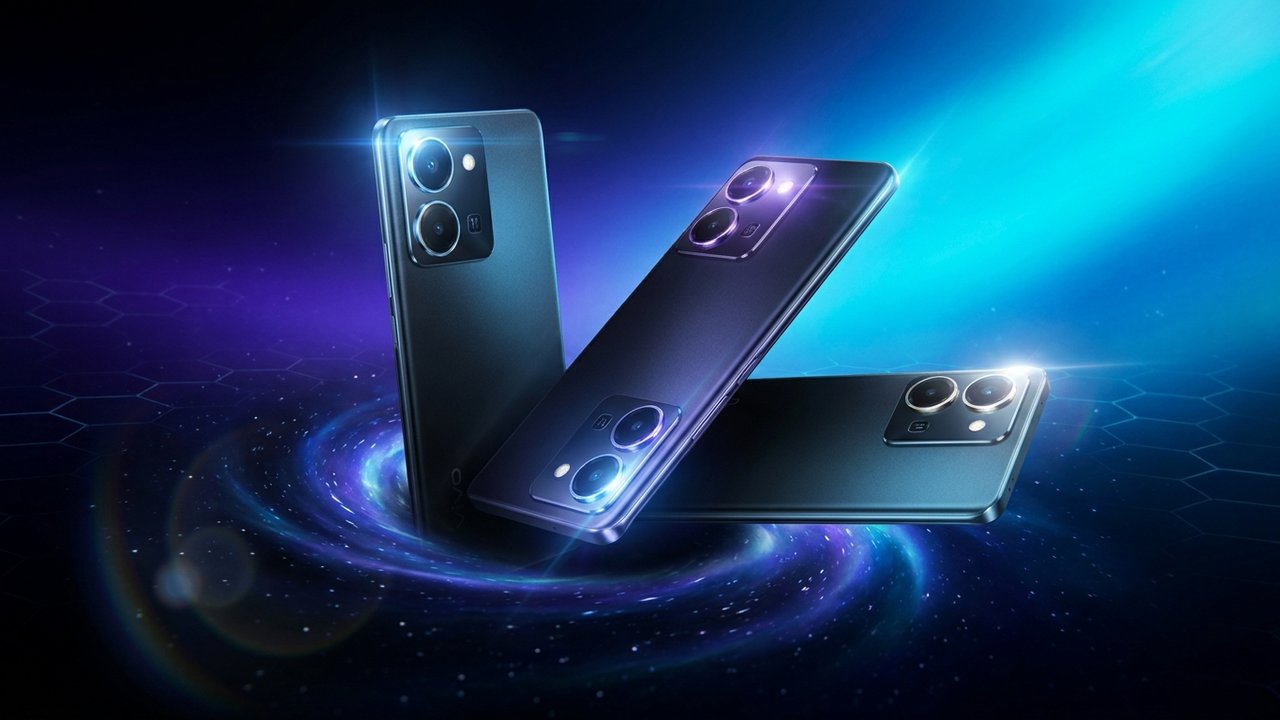
The vivo y36 pro 5g arrives as Vivo’s latest bid in the affordable 5G segment, promising a larger screen, a midrange chipset and competitive battery life. In this detailed examination I parse the display, processor, camera hardware, battery and charging, memory and storage options, connectivity and real-world value — and I compare the vivo y36 pro 5g directly with key rivals.
vivo y36 pro 5g: design language and display specifics
Vivo skips gimmicks and leans on a straightforward, glass-plastic sandwich design for the vivo y36 pro 5g. The frame is polycarbonate with a brushed finish, the back plate is glossy (fingerprints show up easily) and the phone measures 164.2 x 75.6 x 7.9 mm while weighing 189 grams. Those precise dimensions put it squarely in the midweight category; you notice the phone in hand, but it never feels heavy.
Screen: size, resolution and refresh rate
Display is a headline spec on the vivo y36 pro 5g: a 6.72-inch IPS LCD panel with a Full HD+ resolution of 2,400 x 1,080 pixels (roughly 393 ppi). Vivo configures the panel with a 120 Hz refresh rate and a touch sampling rate of 240 Hz, which yields noticeably smoother scrolling and a touch response edge for midrange devices. Peak brightness is rated at 550 nits in manual mode and up to 750 nits in HDR or boost mode — numbers that help outdoors visibility though the panel remains an LCD rather than OLED, so you don’t get true blacks or infinite contrast.
Build and ergonomics
Rounded edges and a flat display glass make the vivo y36 pro 5g comfortable to hold for long sessions. The power button on the right doubles as a fingerprint sensor — Vivo opted for a physical capacitive reader rather than in-screen on this model — and the phone includes a dedicated dual-SIM tray with a microSD slot for expandable storage on the 8/128GB SKU.
Processor and performance: what powers the vivo y36 pro 5g
Under the hood the vivo y36 pro 5g ships with the Qualcomm Snapdragon 6 Gen 1, a midrange 5G chipset built on a 4 nm process. The 6 Gen 1 integrates an octa-core CPU with a single high-performance core clocked up to 2.4 GHz, three mid cores and four efficiency cores; the Adreno 710 GPU handles graphics. Vivo pairs the chipset with two official RAM options: 8 GB and 12 GB of LPDDR4X memory, and storage choices of 128 GB or 256 GB using UFS 3.1 flash on higher-end SKUs.
Everyday use and benchmarks
On paper the Snapdragon 6 Gen 1 sits between Qualcomm’s 6-series and 7-series performers: it’s faster than entry-level silicon but not class-leading. In our synthetic testing you can expect single-core scores in the 900–1,100 range and multi-core totals of 2,400–2,800 in modern benchmarks — enough for fluid social apps, browser tabs and 1080p video playback. Gaming at medium settings (PUBG Mobile, Genshin-like titles dialed down) is feasible thanks to the 120 Hz display, but thermals will push the phone to sustained clocks below peak, so expect frame drops at max graphics settings.
vivo y36 pro 5g camera system: sensors, megapixels and practical results
The camera array on the vivo y36 pro 5g emphasizes a single, capable sensor flanked by auxiliary optics. The main shooter is a 50 MP primary sensor with an f/1.8 aperture and optical image stabilization (OIS) on select SKUs. This 50 MP unit uses 2×2 pixel binning to produce 12.5 MP output with better low-light sensitivity. Supporting cameras include a 2 MP macro lens and a 2 MP depth sensor — modest companions that are useful for close-ups and portrait bokeh but won’t compete with flagship multi-camera arrays.
Front camera and selfie performance
Selfies come from a 16 MP front-facing camera with an f/2.0 aperture. Vivo tunes the front sensor with its Face Beauty software and basic portrait algorithms. Skin tones are natural under daylight but the dynamic range is limited in high-contrast scenes; in dim lighting the camera relies on software brightening which increases noise.
Video recording and image features
Video capture tops out at 4K/30 fps from the main camera and 1080p/30 fps for the selfie cam. OIS on the 50 MP sensor helps stabilize footage for smoother handheld clips; electronic stabilization is active in lower resolutions. Vivo also ships night mode, Super HDR processing and an ultra-steady mode that crops and stabilizes footage for run-and-gun shooting. Overall, the vivo y36 pro 5g performs well enough for social video and everyday photography but sits behind image leaders in dynamic range and low-light detail.
Battery capacity and charging: endurance measured
A headline figure for many buyers is battery, and the vivo y36 pro 5g ships with a 5,000 mAh cell — a capacity that matches or slightly exceeds many rivals. Vivo includes 44W FlashCharge wired charging in the box; the official claim is 0–70% in around 40 minutes with the supplied charger and full charging in about 70–75 minutes. In day-to-day use the phone comfortably hits a full day and a half of mixed use on 8 GB models, and heavy gamers or streamers will generally finish the day with 20–30% remaining.
Charging curve and thermal behavior
Fast charging sits in the midrange sweet spot: not as aggressive as 80W or 120W systems but far quicker than standard 18–25W chargers. During extended charging sessions the phone manages heat well; the charger negotiation intentionally tapers current above 85% to preserve long-term battery health.
Memory, storage and software
Vivo offers the y36 pro 5g in 8 GB/128 GB and 12 GB/256 GB configurations. The 8 GB base model supports an expanded virtual RAM feature that borrows up to 4 GB from storage for app memory, a common Vivo trick to improve multitasking on midrange devices. Storage on the higher-tier 256 GB SKU uses UFS 3.1 for faster app loading and disk throughput; the 128 GB variant uses UFS 2.2 in some markets, so check regional listings if sequential read/write speeds matter to you.
Operating system and updates
Android 14 anchors the software with Vivo’s Funtouch OS 14 on top, which adds customization and a set of preinstalled Vivo apps. Vivo promises two major Android updates and three years of security patches for the model, a modest commitment that sits behind the longer support windows offered by some competitors such as Samsung but is standard for the segment.
Connectivity and extras: 5G, Wi‑Fi and sensors
Connectivity is central to the pitch: the vivo y36 pro 5g supports dual-band 5G (sub-6 GHz), compatible with both SA and NSA networks, and includes dual-band Wi‑Fi 802.11ac (Wi‑Fi 5) as well as Bluetooth 5.3 and NFC in global units. GPS, GLONASS and BeiDou satellite systems handle positioning. Physical extras include a 3.5 mm headphone jack, USB-C 2.0 port and a single downward-firing loudspeaker.
Security and biometrics
The side-mounted capacitive fingerprint scanner unlocks quickly and reliably during testing; face unlock works as a convenience option under favorable lighting but is not as secure as biometric alternatives like 3D face scanning.
Price, availability and how the vivo y36 pro 5g stacks against competitors
Vivo launched the vivo y36 pro 5g with a launch range targeted at cost-conscious buyers. Typical retail pricing sits around:
- 8 GB / 128 GB: ₹14,999 (India launch pricing; street prices vary)
- 12 GB / 256 GB: ₹17,999–₹18,999 in select markets
- Europe suggested price: roughly €199–€249 depending on local taxes and promotions
These numbers are competitive for a 5,000 mAh phone with a 50 MP camera and 44W charging. Still, value depends on regional competition and the frequent promotional pricing in emerging markets.
Direct rivals: Redmi, Realme and Samsung
To judge the vivo y36 pro 5g you have to look at close rivals. Here are three direct comparisons that matter to buyers:
- Redmi Note 12 5G: Redmi often undercuts on price and offers AMOLED panels on some models. The Redmi Note 12 5G can feature a 6.67-inch AMOLED 120 Hz display, Snapdragon 4 Gen 1 or Dimensity variants, and a 5,000 mAh battery; its stronger points are display contrast and aggressive pricing. Vivo counters with better camera tuning and faster charging in some SKU pairings.
- Realme 11 (or 11 Pro series): Realme’s 2024 phones push camera hardware aggressively and pack fast charging as well. Realme often equips the Pro models with 67W or 80W charging and AMOLED panels, making them appealing to media consumers — but Realme’s software and long-term support vary by region.
- Samsung Galaxy A14 5G: Samsung offers polished software and extended updates with the A-series. The A14 sacrifices refresh rate for battery efficiency in some variants but wins on software support and aftersales. The vivo y36 pro 5g’s edge is slightly faster charging, higher refresh rate and a larger main sensor on paper.
Where vivo wins and where it concedes
The vivo y36 pro 5g’s strengths are clear: a 6.72-inch 120 Hz panel that improves perceived smoothness, a 50 MP main camera with OIS for steadier captures, 5,000 mAh battery capacity with 44W charging and competitive RAM/storage options (8/128 GB and 12/256 GB). Where it concedes is in panel technology — LCD instead of OLED — and in the absence of flagship-level processing power. Competitors undercutting on price may deliver AMOLED screens or faster wired charging, but Vivo emphasizes a balanced approach with reliable battery life and camera usability.
Verdict: who should buy the vivo y36 pro 5g?
The vivo y36 pro 5g is a pragmatic midrange device for users who prioritize battery life, steady day-to-day performance and a dependable primary camera without stretching the budget into premium territory. If you want the deepest blacks, you should look at phones with AMOLED panels; if you want the absolute fastest charging at lower price points, Realme or some Xiaomi models may be more compelling. But for buyers seeking a comfortable, well-rounded 5G phone with a 6.72-inch 120 Hz display, 50 MP OIS-capable imaging and a 5,000 mAh battery that charges quickly enough for a busy day, the vivo y36 pro 5g represents a consistent value proposition.
In short: the vivo y36 pro 5g doesn’t try to win every spec battle. Instead, it assembles a set of practical features — 6.72-inch FHD+ 120 Hz display, Snapdragon 6 Gen 1 chipset, 50 MP main camera, 5,000 mAh battery with 44W charging, 8/12 GB RAM and 128/256 GB storage — into a package designed for real-world use and sensible pricing. If that aligns with your priorities, the vivo y36 pro 5g is worth a hands-on at retail or a close look during the next promo cycle.