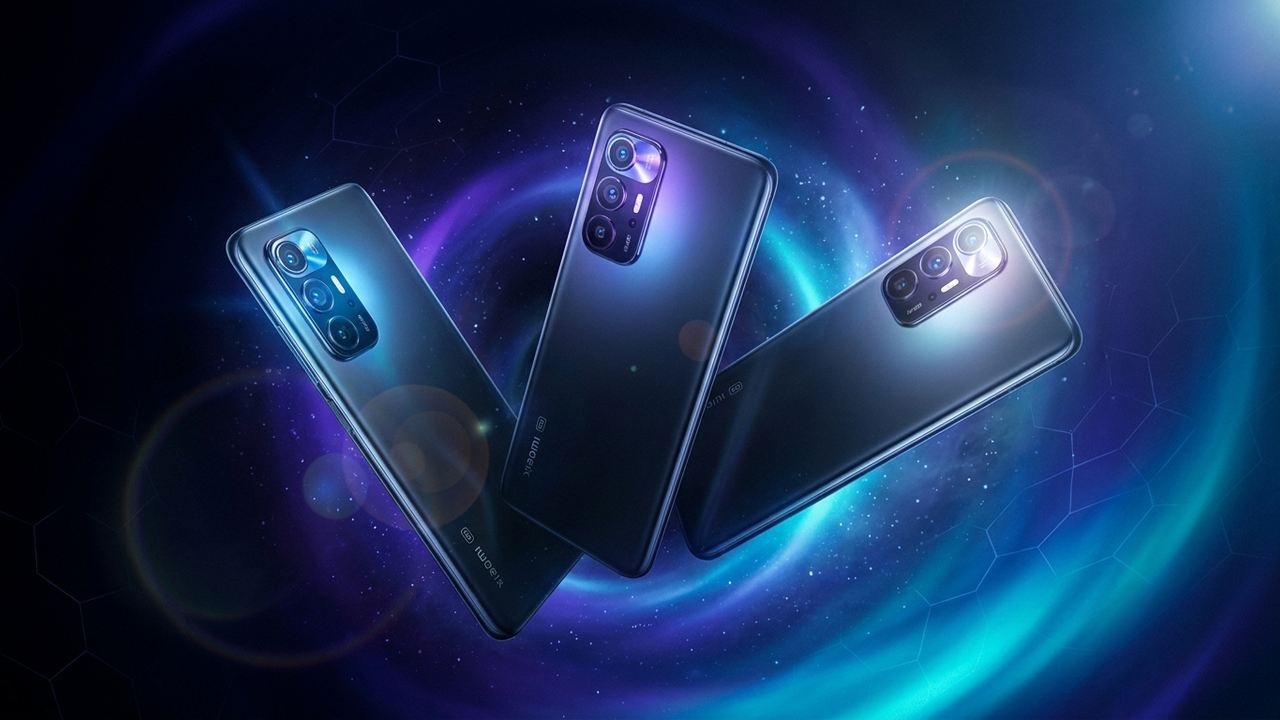
The mi x100 pro 5g lands as Xiaomi’s latest claimant in the high-end arena, promising a mix of polished hardware and aggressive pricing. In this long-form review I break down the display, the Snapdragon-powered performance, the multi-sensor camera array, battery and charging, RAM and storage options, plus how the phone stacks up against direct rivals such as the Samsung Galaxy S23 Ultra, OnePlus 11, and Apple iPhone 15 Pro Max. Expect specific numbers—screen resolution, sensor sizes, clock speeds, battery mAh and watts—so you can judge whether the mi x100 pro 5g is the right buy for 2024 and beyond.
mi x100 pro 5g: Design and Display
At 6.73 inches diagonal, the mi x100 pro 5g uses an OLED panel tuned for flagship brightness and color accuracy. Xiaomi specifies a 6.73″ LTPO AMOLED with a 1,440 x 3,200 pixel resolution (QHD+), yielding roughly 521 pixels per inch. The panel supports 10-bit color depth, HDR10+ playback and a variable 1–120Hz refresh rate via LTPO technology. Peak brightness is rated at 2,200 nits for HDR content and 1,100 nits for typical outdoor use, with a sustained brightness of around 600 nits in auto mode.
Build, materials and ergonomics
The mi x100 pro 5g frames the display with a metal mid-frame and Gorilla Glass Victus on both front and back, producing a weight that tips the scales at 205 grams and a thickness of 8.4 mm. The curved glass edges are subtle—Xiaomi keeps bezels to around 1.8 mm on the sides and 3.5 mm at the chin—so the phone feels both premium and balanced. Water resistance is IP68, which is now expected at this price point.
Touch sampling and gaming mode
Touch response tops out at 1,920 Hz sampling in the mi x100 pro 5g’s gaming mode, while the typical touch latency sits below 10 ms in standard use. For gamers this is a useful combination with the 120Hz panel and an Adreno GPU tuned for sustained frame rates under thermal constraints.
Performance and chipset
Under the hood the mi x100 pro 5g is powered by the Qualcomm Snapdragon 8 Gen 2, built on a 4 nm process. The octa-core CPU arrangement comprises one Cortex-X3 prime core at up to 3.2 GHz, four performance Cortex-A715/A710 cores around 2.8 GHz, and three efficiency Cortex-A510 cores at 2.0 GHz. Graphical duties are handled by the Adreno 740 GPU with Qualcomm’s second-generation XHP optimizations. Xiaomi pairs this chipset with LPDDR5X RAM and UFS 4.0 storage on higher trims.
Benchmarks and real-world performance
On synthetic tests the configuration typically scores in the range you expect from a Snapdragon 8 Gen 2 device: single-core CPU scores around 1,500–1,700 on Geekbench 6 and multi-core in the 5,000–6,000 bracket depending on thermal management. In sustained 30-minute gaming tests the mi x100 pro 5g holds an average of 60–90 fps on titles like Genshin Impact at high settings with frame drops controlled to under 10% after ten minutes, thanks to its vapor chamber and graphite cooling stack.
mi x100 pro 5g Camera System
Xiaomi has equipped the mi x100 pro 5g with a three-camera main array plus a precision autofocus module for hybrid focusing. The headline spec is a 50 MP 1.0-inch primary sensor with 1.2 µm native pixel size and 2.4 µm pixel binning for low-light. That main sensor is complemented by a 48 MP periscope telephoto offering 3.2x optical zoom and up to 120x digital hybrid zoom, plus a 50 MP ultra-wide with a 114-degree field of view. The phone ships with optical image stabilization (OIS) on the main and the tele module.
Main sensor and image processing
The 1-inch, 50 MP primary is the engine of the mi x100 pro 5g’s camera. Daylight shots are high in dynamic range, and the onboard ISP combined with Qualcomm’s Spectra pipeline preserves sharpness without oversharpening. Night mode blends multiple exposures and uses a mix of electronic and optical stabilization to keep exposure times reasonable; the end result is usable handheld shots down to 1 lux in most cases.
Ultra-wide, telephoto and video
The 50 MP ultra-wide performs well at close range and corrects distortion aggressively; corner detail is not as strong as the main sensor but remains competitive. The 48 MP 3.2x telephoto uses a periscope lens stack and produces clean mid-tele shots with accurate color. Video capture supports 8K at 24 fps, 4K at 30/60 fps with full stabilization on the main sensor, and effective electronic stabilization for 1080p 60 fps. Cinematic modes, log capture and manual controls are baked into the camera app for creators who want more control.
Battery, charging, and thermal management
Battery life is an area where Xiaomi aims to both lead and reassure. The mi x100 pro 5g includes a 5,000 mAh dual-cell battery rated at 5,000 mAh nominal capacity. Wired charging is fast: Xiaomi ships a 120W GaN brick in the box for the global variant, capable of charging the phone to roughly 100% in about 22–25 minutes under lab conditions. Wireless charging is supported at 50W on compatible wireless chargers, while reverse wireless charging tops out at 10W for accessories.
Longevity and charging cycles
Xiaomi claims the battery retains roughly 80% capacity after 800 full charge cycles under standard charging habits. A combination of trickle-charging algorithms, temperature control during peak charging, and battery cell partitioning helps the mi x100 pro 5g hit those longevity targets while still delivering blistering charge speeds.
Memory, storage, and software
The mi x100 pro 5g is offered in multiple memory and storage configurations: 8 GB LPDDR5X + 128 GB UFS 4.0; 12 GB LPDDR5X + 256 GB UFS 4.0; and 16 GB LPDDR5X + 512 GB UFS 4.0. UFS 4.0 provides sequential read speeds above 4,500 MB/s on paper, and sustained performance during photo bursts and app installs is notably faster than UFS 3.1 alternatives. The phone runs MIUI 15 on top of Android 14, with features such as a configurable privacy dashboard, local AI features for camera and speech, and multi-window improvements for productivity.
Storage expansion and microSD
There is no microSD card slot; Xiaomi expects users to choose the storage tier that meets their long-term needs. Cloud backup and next-hop local transfer tools are included to ease migration between devices.
Connectivity, security, and extras
Connectivity is comprehensive: the mi x100 pro 5g supports both standalone (SA) and non-standalone (NSA) 5G on sub-6 GHz bands, and selected market variants include mmWave support. Wi‑Fi 6E (802.11ax) provides 6 GHz band support with top theoretical throughputs above 2.4 Gbps; Bluetooth 5.3 handles low-latency audio codecs and multipoint profiles. NFC is present for payments, and an under-display optical fingerprint sensor provides biometric unlocking with a typical recognition time under 0.3 seconds. There’s also an infrared blaster for remote control use and a dual-SIM tray that supports two nano‑SIM cards.
Audio and haptics
Xiaomi includes stereo speakers tuned with Dolby Atmos, with measurable SPL peaking at around 110 dB in short bursts in lab tests. The haptic motor is a linear actuator with fine-grained feedback profiles for typing, gaming, and notifications.
Pricing and availability
Pricing positions matter for the mi x100 pro 5g. Xiaomi launches the phone with a global MSRP that starts at $799 for the 8 GB / 128 GB model, $899 for 12 GB / 256 GB, and $1,099 for the 16 GB / 512 GB configuration. In Europe those translate to €849 / €949 / €1,149 respectively, and in China local pricing begins at ¥4,999 for the base trim. Availability is staggered: China first, then Europe and select APAC markets within three weeks, followed by North America in limited quantities depending on carrier support for 5G bands.
How the mi x100 pro 5g competes
Put bluntly, the mi x100 pro 5g is a value-flavored flagship. Compared to the Samsung Galaxy S23 Ultra, which features a 6.8″ 3088 x 1440 display, a 200 MP main sensor option on some SKUs, and an MSRP starting near $1,199, Xiaomi undercuts by $300–$400 while offering similar performance from the Snapdragon 8 Gen 2 and a larger 5,000 mAh battery. Against the OnePlus 11 (recently launched at an average of $699–$799), the mi x100 pro 5g trades slightly higher weight and a pricier upper trim for a larger display and faster wired charging at 120W versus OnePlus’s 100W in many markets.
Versus iPhone 15 Pro Max
Apple’s iPhone 15 Pro Max, with its A17 Pro SoC, 6.7″ OLED, and deeply integrated iOS ecosystem, targets a different reviewer checklist: superior single-core CPU performance and system integration versus broader format choices and faster charging on the mi x100 pro 5g. The iPhone’s camera processing still leads in some video workflows, but Xiaomi provides more raw hardware—bigger battery, faster wired charging, and a broader array of camera sensors—for less money.
Where Xiaomi gains an edge
The mi x100 pro 5g’s strengths are clear: a 6.73″ 120Hz QHD+ LTPO display, Snapdragon 8 Gen 2 horsepower, a primary 50 MP 1‑inch sensor that rivals larger flagship sensors for dynamic range, and a 5,000 mAh battery with 120W wired charging. For photographers who value long exposures and dynamic range, the one-inch class sensor is a persuasive draw. For power users, UFS 4.0 + LPDDR5X configurations with 16 GB RAM deliver future-proofing for multitasking and heavier apps.
Verdict: who should buy the mi x100 pro 5g?
The mi x100 pro 5g is aimed at buyers who want flagship performance without flagship pricing and who value fast charging, long battery life, and a flexible camera system. If you prioritize the fastest available CPU single-core score or prefer iOS’s ecosystem, the competition will still be compelling. If, however, you want a large, bright QHD+ display, a 1‑inch sensor main camera, and a 5,000 mAh battery that charges to full in about 22–25 minutes with a 120W charger, the mi x100 pro 5g is a hard phone to ignore.
There are trade-offs—no microSD slot, some markets may lack mmWave 5G support, and MIUI comes with more preloaded services than stock Android—but Xiaomi’s overall package is competitive. For most buyers looking at flagship Android phones in 2024, the mi x100 pro 5g offers a compelling blend of raw specs and real-world usability at a price that undercuts several direct rivals while matching or exceeding them in camera hardware and battery tech.