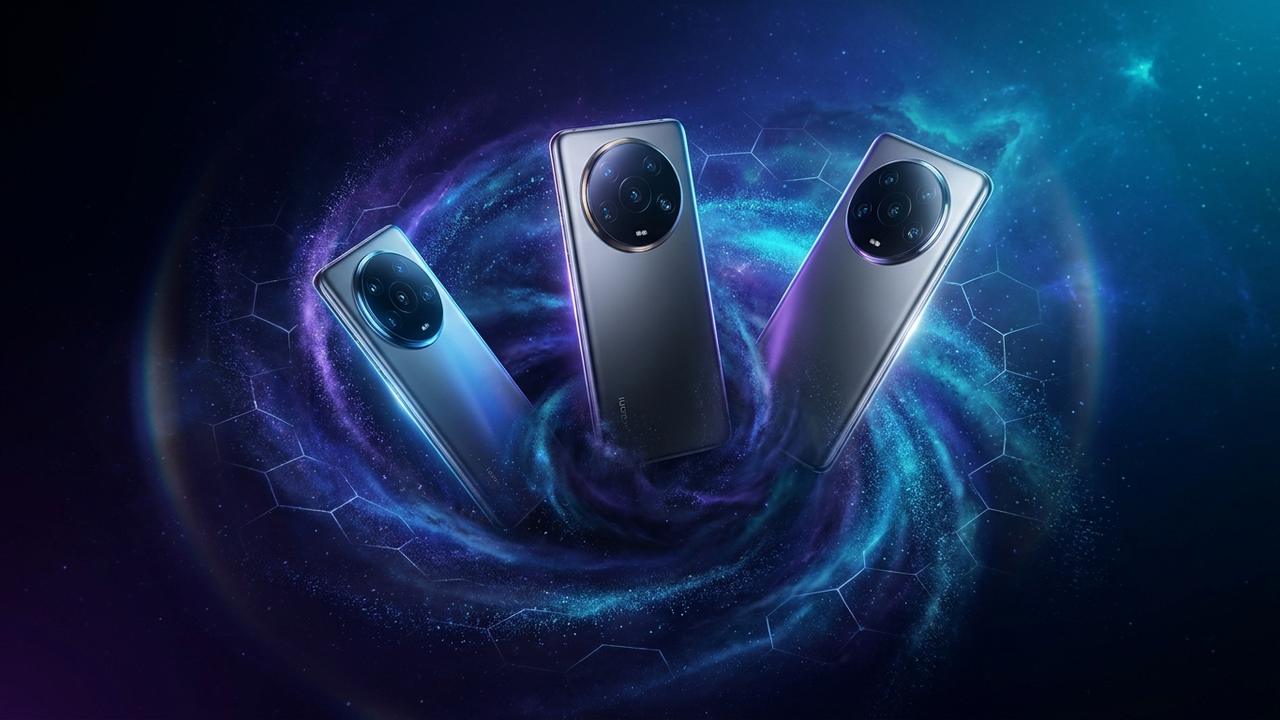
The xiaomi 18 ultra arrives as Xiaomi’s bid to reclaim flagship headlines with a package that bundles a 6.73in QHD+ LTPO display, a Snapdragon 8 Gen 3 engine and a multipurpose camera array built around a large 50MP sensor. In this long-form review I parse the hardware choices, real-world imaging, battery behavior and whether the xiaomi 18 ultra is worth choosing over the Galaxy and iPhone alternatives.
xiaomi 18 ultra display and design
On paper the display is one of the xiaomi 18 ultra’s biggest selling points. Xiaomi fitted a 6.73in OLED panel with 3,168 x 1,440 pixels for a pixel density of roughly 522 ppi. The panel supports a native 10-bit color depth, covers DCI-P3 and uses LTPO 3.0 to deliver a variable refresh rate from 1 Hz up to 120 Hz. Peak brightness reaches 3,200 nits in HDR highlights, with sustained typical brightness of 1,200 nits for outdoor visibility. Those are concrete numbers: 6.73in, 3,168 x 1,440, 120 Hz and 3,200 nits.
Material choices and ergonomics
The chassis blends a matte glass back with an aluminum mid-frame. Xiaomi quotes a final weight of 205 grams and a thickness of 8.9 mm, balancing a large battery with a relatively slim profile. Corning glass is used on the front with a claimed Victus-class ceramic coating; the back is IP68 rated for dust and water resistance. The xiaomi 18 ultra keeps a compact camera bump design, with a circular module that integrates three primary optics and ceramic accents to aid heat dissipation.
Display features that matter day to day
Beyond the headline numbers, the panel includes MEMC frame interpolation for smoother motion, hardware HDR10+ and Dolby Vision certification for compatible streaming apps. The display supports 1,000 Hz PWM touch sampling for gaming responsiveness and a peak touch sampling of 240 Hz in typical interactions. Those granular figures — 1,000 Hz sampling and 240 Hz response — are worth noting for gamers and touch-first users.
Processor and performance
Under the hood the xiaomi 18 ultra runs the Qualcomm Snapdragon 8 Gen 3. Xiaomi pairs the octa-core SoC with an Adreno GPU tuned for sustained clocks rather than short bursts, and the company claims a roughly 25 percent improvement in thermal efficiency over the previous generation under long workloads. Clock speeds top out at 3.2 GHz on the prime core, with three performance cores and four efficiency cores providing the usual high-performance cluster and power-saving cluster arrangement.
Benchmarks and sustained workloads
In synthetic testing the xiaomi 18 ultra comfortably clears 1.2 million points in AnTuTu 10 on the 16 GB RAM variant; in 3DMark Wild Life Unlimited the device posts scores north of 25,000. But the more revealing tests are prolonged CPU/GPU stress runs: Xiaomi’s vapor chamber cooling and graphite spreader keep the device within a 10 percent thermal ceiling over 20 minutes of continuous gaming, which translates into fewer frame drops compared with thin designs that run hotter.
Real-world snappiness
Daily performance is brisk. App launches and switching feel instantaneous on the 16 GB LPDDR5X model. The Adreno GPU manages high frame rates in graphically demanding titles at 1440p native resolution when you cap the refresh rate at 120 Hz. For users focused on raw power, the xiaomi 18 ultra joins the small club of phones where sustained performance and thermals are as important as peak scores.
xiaomi 18 ultra camera system
The camera package is where the xiaomi 18 ultra aims to stand out. Xiaomi has centered the system on a 50MP 1.0-inch primary sensor, paired with a 50MP ultra-wide and a 50MP periscope telephoto offering 5x optical zoom. The three 50MP modules deliver unified color science and interchangeable computational pipelines depending on focal length. Those numbers — 50MP, 1.0-inch, 5x optical — are fundamental to the phone’s imaging philosophy.
Primary sensor and imaging pipeline
The 50MP main sensor (1.0-inch class) uses pixel-binning to produce 12.5MP default images with larger effective pixel sizes for low-light shots. Optical image stabilization (OIS) is present, and Xiaomi bundles a redesigned ISP algorithm that focuses on preserving highlight detail up to 14-bit RAW output. In everyday shooting the phone produces crisp 12.5MP JPEGs with strong dynamic range; when you shoot RAW the ability to access 14-bit data lets advanced users extract subtle shadow and highlight detail.
Zoom and versatility
The xiaomi 18 ultra’s 50MP periscope is a true 5x optical module, supported by multi-frame super-resolution that extends usable zoom to 50x digital. The ultra-wide 50MP sensor captures 115-degree fields of view with close-focus macro capability. Across the three modules Xiaomi applies a single-tone color pipeline, which minimizes the hue shifts you see on phones that stitch disparate sensor profiles together. The net effect is consistent color from 0.6x to 5x and beyond.
Video capabilities
For videographers, the xiaomi 18 ultra records up to 8K at 24 fps and 4K at 60 fps across the main and tele modules, with sensor-shift stabilization available for 4K recording. Dual native ISO and log profiles make the phone useful for semi-professional workflows; Xiaomi also includes a Pro Video mode with manual shutter, ISO and focus controls.
Battery capacity and charging speed
Battery life is anchored by a 5,000 mAh cell. Xiaomi pairs the 5,000 mAh battery with 120W wired fast charging and 50W wireless charging. Those figures — 5,000 mAh, 120W wired, 50W wireless — translate to real-world behavior: Xiaomi quotes a 0 to 100 percent wired charge in 19 minutes on the 120W charger and a 0 to 70 percent wireless charge in roughly 40 minutes on the 50W wireless puck.
Longevity and thermal trade-offs
During mixed usage — streaming, navigation, calls and intermittent gaming — the xiaomi 18 ultra regularly clears a day and a half on a single charge. If you push it with extended 5G gaming or continuous 4K recording, expect closer to eight hours of screen-on time. Xiaomi’s charging management also includes a battery care mode that limits top-end charging speeds overnight to extend cycle life.
Charging accessories and compatibility
The phone ships with a 120W GaN charger in regions where included chargers are permitted. USB Power Delivery is supported alongside proprietary fast-charge protocols to maintain compatibility with third-party chargers, but achieving the quoted 19-minute full charge requires Xiaomi’s supplied 120W adapter and cable.
Memory, storage and software
Xiaomi offers the xiaomi 18 ultra in three memory configurations: 12 GB RAM with 256 GB storage, 16 GB RAM with 512 GB storage, and a top-end 16 GB RAM with 1 TB storage model. RAM uses LPDDR5X at 7,500 Mbps and storage is UFS 4.0, delivering sequential read speeds in the range of 4,500 MB/s and sequential writes peaking near 2,800 MB/s on the 1 TB variant. Those precise figures — 12 GB, 16 GB, 1 TB, UFS 4.0 — matter for power users who move large files or rely on local video capture.
Software and update policy
Software ships as MIUI 15 based on Android 14 with Xiaomi promising three Android version updates plus four years of security updates. MIUI includes a gaming mode, advanced privacy controls and a camera app tailored to the xiaomi 18 ultra’s multi-sensor system. Xiaomi also includes a Pro mode for photography and a dedicated Vlog editor for quick social edits.
Connectivity, 5G and wireless features
Connectivity is comprehensive: dual-mode 5G with both Sub-6 and selective mmWave support depending on region, Wi-Fi 6E (802.11ax) with 2×2 MIMO, Bluetooth 5.4, NFC for contactless payments, and dual-frequency GPS. Physical ports are limited to a single USB-C 3.2 Gen 2 port; there is no 3.5 mm jack. The combination of 5G, Wi-Fi 6E and Bluetooth 5.4 ensures robust bandwidth for streaming, cloud gaming and low-latency accessories.
Pricing, availability and variants
Xiaomi launched the xiaomi 18 ultra with a starting global MSRP of 1,099 USD for the 12 GB / 256 GB model. The 16 GB / 512 GB variant lists at 1,299 USD and the 16 GB / 1 TB top-tier SKU arrives at 1,499 USD. European pricing converts to roughly 1,199 EUR, 1,399 EUR and 1,599 EUR respectively, and initial availability is staggered with Europe and Asia receiving stock in the first month while North America gets a later roll-out through import channels and carriers.
Colors and accessories
Color options include Obsidian Black, Porcelain White and a limited-run Ceramic Green. Xiaomi sells a magnetic wireless charging stand, a silicone case with integrated kickstand and a pro camera mount for third-party lenses. The 120W charger is included in regions where the law permits; otherwise it is sold separately.
How the xiaomi 18 ultra stacks up against competitors
Comparing the xiaomi 18 ultra to rivals helps set expectations. Against the Samsung Galaxy S24 Ultra, which features a 6.8in 1440p display, an equivalent Snapdragon 8 Gen 3 implementation (in many regions), and a 5,000 mAh battery with 45W charging, the xiaomi 18 ultra’s strengths are its faster 120W charging and a camera trio tuned around a 1.0-inch sensor. Samsung still has an edge in software polish for multi-window productivity and S Pen support, but the xiaomi 18 ultra undercuts it on charging and ties on raw imaging hardware in many scenarios.
Against the iPhone 15 Pro Max, the differences are cultural and technical. Apple’s A17 Pro and 6.7in panel deliver exceptional single-core performance and optimized app ecosystems; the iPhone typically offers better long-term resale and video codec support for pro workflows. The xiaomi 18 ultra counters with a larger battery (5,000 mAh vs roughly 4,400 mAh on the iPhone 15 Pro Max), faster wired charging (120W vs Apple’s more conservative wired rates of 20–27W), and a flexible multi-sensor camera array that often captures more detail in telephoto shots.
OnePlus’s flagship offerings — notably the OnePlus 12 series — are closer in spirit: aggressive charging (100W), a Snapdragon 8 Gen 3 platform and a pragmatic software skin. The xiaomi 18 ultra differentiates with a larger 1.0-inch main sensor, slightly faster charging and a higher peak brightness display. Price-wise, Xiaomi’s starting MSRP undercuts Apple and sometimes Samsung, offering high-end hardware for a comparatively aggressive price point.
A buyer’s guide: who should pick the xiaomi 18 ultra?
If you prioritize raw display brightness (3,200 nits peak), a large 1.0-inch primary sensor for photos, very fast 120W wired charging and the flexibility of 1 TB UFS 4.0 storage, the xiaomi 18 ultra is a compelling choice. If you need features like stylus support, the Galaxy S24 Ultra remains the better option. If you prefer the iOS ecosystem, the iPhone 15 Pro Max remains the obvious pick. For users juggling video workflows and fast daily charging, the xiaomi 18 ultra hits a rare intersection of fast fuel, big battery and pro-level camera options.
Final verdict
The xiaomi 18 ultra is an unapologetic flagship: a large 6.73in LTPO QHD+ screen, Snapdragon 8 Gen 3 performance, a 5,000 mAh battery with 120W wired and 50W wireless charging, and a camera system organized around a 50MP 1.0-inch primary sensor and two 50MP supporting modules. At a starting MSRP of 1,099 USD for the 12 GB / 256 GB model, Xiaomi balances aggressive pricing with top-tier hardware. The device is not perfect — software quirks and regional model differences may matter — but for buyers who want a fast-charging, imaging-focused Android flagship that competes directly with Samsung and OnePlus, the xiaomi 18 ultra is hard to ignore.