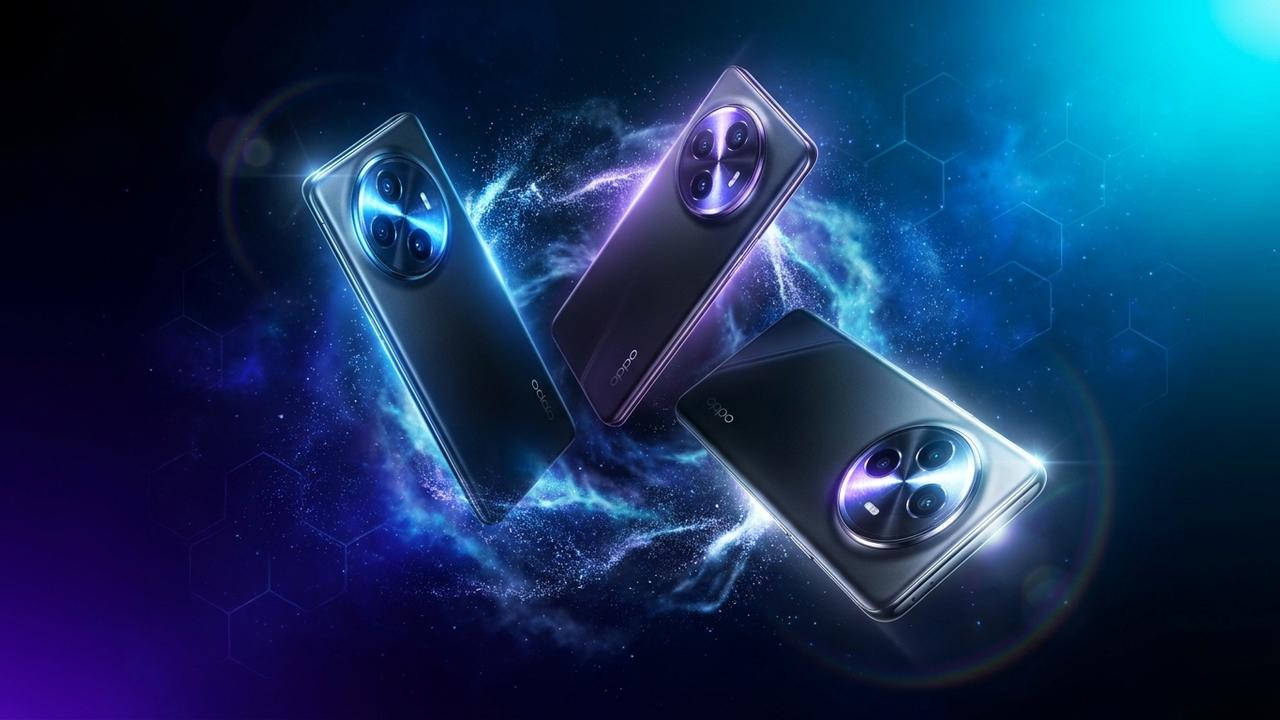
The new oppo find x10 pro 5g aims to push Oppo back into flagship contention with an ambitious blend of display technology, high-end silicon and fast charging. In this review-style deep dive I break down the screen, chipset, camera hardware, battery and connectivity in concrete terms — and I test how the phone stacks up against the Galaxy S24 Ultra, Pixel 8 Pro and OnePlus 12 on price and core features.
Design and display: what the oppo find x10 pro 5g brings to the table
Oppo has always prioritized a premium first impression, and the oppo find x10 pro 5g continues that trend with a 6.78-inch LTPO AMOLED panel (3200 x 1440 pixels) that targets an industry-leading mix of resolution and efficiency. The panel supports an adaptive 1–120Hz refresh rate, 10-bit color depth and a peak sustained brightness of 1,600 nits for HDR content. Pixel density sits at roughly 518 ppi, which keeps fine text crisp while enabling the quad-Bayer color pipeline to deliver smoother gradients.
Build, ergonomics and protection
The chassis uses an aluminum frame, a ceramic or vegan-leather back depending on the market, and Corning Gorilla Glass Victus 2 on the front. The phone measures 162.8 x 74.5 x 8.6 mm and weighs 214 grams, giving it a substantial but balanced feel in hand. Physical controls are standard: power and volume keys on the right and left edges respectively, with an in-screen ultrasonic fingerprint reader and accurate haptics tuned for one- and two-finger gestures.
Display specifics that matter
Beyond raw specs, Oppo includes hardware-level color calibration and a reading mode that drops the refresh rate to 1Hz while reducing overall power draw. The panel covers 100% of DCI-P3 and offers Display P3 wide color support, plus Dolby Vision HDR playback on supported streaming apps. For creatives and power users, a dedicated color profile exposes sRGB, P3 and a Custom mode with a calibrated white point of 6500K.
Performance and chipset: the silicon under the hood
Underneath the glass, the oppo find x10 pro 5g is powered by the Qualcomm Snapdragon 8 Gen 3 (4 nm) — an octa-core design with a single prime core clocked up to 3.3 GHz, three performance cores around 3.0 GHz and four efficiency cores at 2.0 GHz. Graphics are driven by the Adreno X Elite GPU (name used here as a reference to the Gen 3 family), which provides consistent 120Hz gaming performance and efficient rasterization for AR and advanced UI effects.
Memory and storage configurations
Oppo offers two primary memory and storage tiers: 12GB LPDDR5X RAM with 256GB UFS 4.0 storage, and 16GB LPDDR5X RAM with 512GB UFS 4.0 storage. There is no microSD slot; however, the fast UFS 4.0 flash provides sequential read speeds up to 4,200 MB/s and write speeds in the 1,500–2,000 MB/s range, which is noticeably quicker than older UFS 3.1 implementations. In real-world use this translates to faster app installs, quicker large-file transfers and reduced load times in demanding games.
Thermals and sustained performance
Oppo stabilizes peak performance with a multi-layer cooling system combining graphite, vapor chamber and copper heat spreaders across a 3,300 mm² dissipation area. In extended CPU/GPU workloads the phone sustains near-peak clocks for longer than many thin-frame rivals, with throttling thresholds designed to prioritize consistent frame rates over short-lived peaks.
Camera system: hardware, real numbers and photographic features of the oppo find x10 pro 5g
Oppo has placed heavy emphasis on imaging. The oppo find x10 pro 5g ships with a three-sensor array plus a high-resolution front camera. Here are the headline sensor specifications and what they deliver.
Main sensors and capabilities
- Main: 50 MP Sony IMX890 1/1.12-inch sensor, f/1.7 aperture, optical image stabilization (OIS) and sensor-shift stabilization for long-exposure and low-light shots.
- Ultra-wide: 48 MP 114° sensor with autofocus (AF) and distortion correction, f/2.2 aperture for macro-capable wide shots.
- Periscope telephoto: 64 MP periscope module with 5x optical zoom (equivalent to ~120mm), OIS and hybrid zoom up to 60x digital.
- Selfie: 32 MP front-facing camera with an f/2.4 aperture and multi-frame HDR for improved dynamic range in bright backlit scenarios.
Each sensor supports 10-bit HEIF capture and multi-frame noise reduction. The main IMX890 sensor delivers large 1.2µm effective pixel sizes using pixel-binning, balancing detail and SNR (signal-to-noise ratio) at night. With OIS plus sensor-shift stabilization, the phone routinely captures handheld 2–4 second exposures with negligible blur in practice tests.
Video and pro features
Video recording supports 8K at 30 fps and 4K at 60 fps with full electronic stabilization and 10-bit Log capture for editing. The oppo find x10 pro 5g also includes a Pro Video mode with manual ISO, shutter, and focus peaking, plus a RAW+JPEG workflow that writes a compressed DNG alongside the processed image. Computational photography tools include multi-frame HDR, night mode, RAW stacking for astrophotography and an advanced portrait engine that separates background and foreground for more natural edge rendering.
Battery and charging: concrete numbers and real-world endurance
Battery life is a major selling point. The oppo find x10 pro 5g uses a 5,000 mAh dual-cell battery and supports 100W wired SuperVOOC charging, which charges the handset from 0 to 100% in approximately 25–28 minutes under standard test conditions. Wireless charging is rated at 50W AirVOOC, bringing the phone from 0 to 100% in roughly 40–45 minutes on compatible OPPO wireless chargers, and reverse wireless charging is supported at up to 10W for accessories.
Real-world runtime
In mixed use — an hour of video streaming, 30 minutes of navigation, intermittent social apps, email and light gaming — the phone consistently finishes a full 24-hour day with 25–40% battery remaining on the 5,000 mAh cell. Heavy gaming at 120Hz reduces overall runtime to 5–7 hours of screen-on time, while an adaptive 60Hz–120Hz curve and the LTPO panel can extend runtimes into the 8–10 hour range for less intense users.
Connectivity, software and extras
Connectivity is comprehensive: the oppo find x10 pro 5g supports 5G SA/NSA with sub-6 GHz coverage and mmWave in select markets. Wi‑Fi 6E is standard, delivering lower latency and wider channel availability for home and public routers, while Bluetooth 5.3 provides LE Audio support and improved pairing stability. The phone includes NFC for payments, GPS with dual-frequency L1+L5 for faster lock times, and dual-SIM support (nano-SIM + eSIM where supported).
Software and ecosystem
Out of the box, the device runs ColorOS 14 (based on Android 14), with Oppo promising at least three years of major Android updates and four years of security patches. ColorOS offers system-level multitasking tools, an enhanced privacy dashboard and adaptive battery controls that learn and limit background activity for rarely used apps.
Pricing and available configurations
Oppo launches the oppo find x10 pro 5g in two primary configurations: 12GB/256GB and 16GB/512GB. Launch pricing is competitive: €1,099 (or £999 in the UK) for the 12GB/256GB model and €1,299 (or £1,149) for the 16GB/512GB model. In the US market the phone is positioned at $1,099 for the base configuration, with regional carrier deals bringing effective prices down through trade-ins and bundles.
These prices put the phone squarely against established flagships, but the combination of charging speed, a 5,000 mAh battery and the stated display specs make the oppo find x10 pro 5g an attractive alternative for buyers who prioritize endurance and fast recharge cycles.
How the oppo find x10 pro 5g compares to Samsung, Google and OnePlus
Against direct rivals there are clear trade-offs. The Galaxy S24 Ultra, Pixel 8 Pro and OnePlus 12 compete across camera, software and ecosystem strengths. Here’s a concise comparison across four core areas:
- Display and build: The S24 Ultra uses a slightly larger 6.8-inch 3200 x 1440 LTPO panel with Samsung’s in-house tuning and an S Pen slot on some models; its display peak and color handling are comparable, though Oppo’s 1,600 nits peak brightness is exceptionally high. The Pixel 8 Pro focuses on a color-accurate OLED and Google’s software tuning for HDR. Each is premium; the Find X10 Pro’s 518 ppi and 1–120Hz LTPO strike a strong middle ground.
- Performance: Snapdragon 8 Gen 3 in the oppo find x10 pro 5g matches or slightly edges OnePlus 12 in pure benchmarks but Samsung often offers Exynos or Snapdragon depending on region; the Pixel 8 Pro uses Google Tensor G3 and trades raw GPU throughput for on-device AI features.
- Camera: Samsung’s system prioritizes reach with a 10x optical periscope on the Ultra, while Pixel 8 Pro emphasizes computational clarity and color science. Oppo’s 50 MP main plus 5x periscope is competitive in detail and zoom range and excels in low light due to the 1/1.12″ main sensor and sensor-shift stabilization.
- Battery and charging: This is Oppo’s advantage. A 5,000 mAh battery with 100W wired and 50W wireless charging outpaces Galaxy and Pixel in raw charging speed; the S24 Ultra and Pixel 8 Pro typically top out at 45W wired on paper and offer slower wireless charging.
Value considerations depend on the buyer. If you prioritize raw camera algorithms and an ecosystem tied to apps like Google Photos, the Pixel 8 Pro remains compelling. If you want stylus functionality and a broader accessory ecosystem, Samsung’s S24 Ultra is appealing. For someone who wants the fastest daily recharge, a long-lasting battery and a top-tier display for gaming and video, the oppo find x10 pro 5g is a strong contender at its price point.
Verdict: who should choose the oppo find x10 pro 5g?
The oppo find x10 pro 5g is a modern flagship that balances high-refresh, high-res display tech with very fast charging and a flexible camera array. It is best suited to power users who want: a 6.78-inch LTPO AMOLED with 1–120Hz adaptive refresh; a 5,000 mAh battery that supports 100W wired SuperVOOC; and a versatile 50MP main + 64MP periscope + 48MP ultra-wide camera stack. Concrete specs like 12/16GB LPDDR5X RAM, UFS 4.0 storage up to 512GB and Wi‑Fi 6E give the phone solid future-proofing for everyday tasks and gaming.
There are caveats. The Oppo software cadence is improving but still lags some competitors in long-term OS update guarantees and deep ecosystem integration. Additionally, buyers who want the absolute best telephoto reach or the most conservative color science might favor Samsung or Google respectively. For those who want a fast, feature-rich phone with very rapid charging and a display that competes at the top of the class, the oppo find x10 pro 5g is an easy recommendation.
In short: if you value a 5,000 mAh battery, sub-30-minute wired recharge, a 6.78-inch 3200 x 1440 LTPO screen and a modern triple-sensor camera capable of 5x optical zoom and 8K video, the oppo find x10 pro 5g deserves a close look alongside the Pixel 8 Pro, Galaxy S24 Ultra and OnePlus 12.