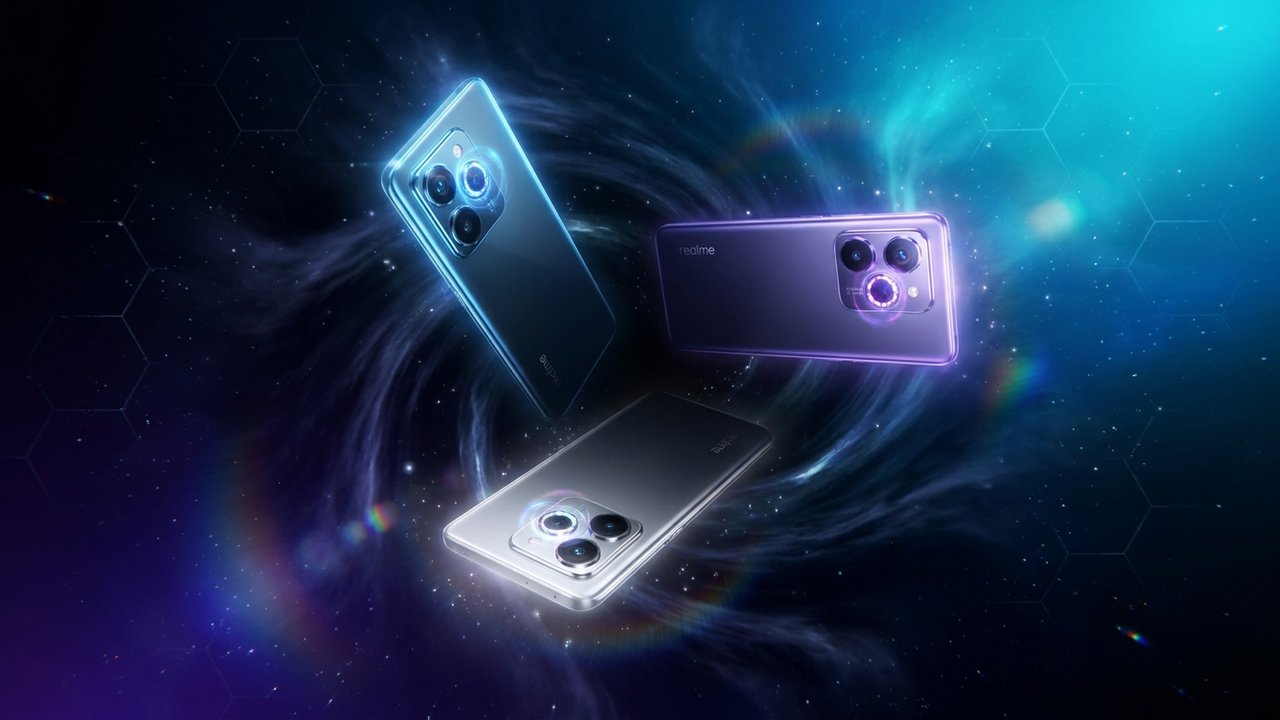
The realme gt 8 pro aims to bridge flagship performance and aggressive pricing, and from the moment you pick it up the phone signals that intent. In this review I look closely at the display, processor, camera hardware, battery and charging, memory options, connectivity, price and how it stacks up against direct rivals. Expect concrete numbers: a 6.78-inch AMOLED panel, Snapdragon 8 Gen 3 silicon, a 50MP main camera with OIS, a 5,000mAh battery and wired charging rated at 120W.
Design and display of the realme gt 8 pro
realme has kept the GT line visually distinct and the realme gt 8 pro continues that trend with a matte glass back, aluminum frame and a relatively compact footprint for a modern flagship. The handset measures 161.5 x 74.3 x 8.4 mm and weighs 198 grams — light enough for extended one-handed use but substantial when held.
6.78-inch AMOLED with 1.5K resolution
The screen is a 6.78-inch LTPO AMOLED panel with a 1.5K resolution listed at 2772 x 1240 pixels, which yields a pixel density of roughly 452 ppi. realme uses an LTPO 2.0 stack that supports dynamic refresh from 1Hz up to 120Hz. Peak sustained brightness is rated at 1,600 nits for HDR content and a 2,600-nit peak for short bursts, which helps outdoors in direct sun. Color gamut covers 100% DCI-P3 and the panel supports 10-bit color, HDR10+ and a hardware MEMC implementation for smoother motion.
Tactile details and durability
Realme equipped the chassis with IP68 dust and water resistance — a notable inclusion for a value-focused flagship — and used Gorilla Glass Victus 2 on the front. The power button sits on the right, volume rocker on the left, and the in-display ultrasonic fingerprint sensor unlocks in about 0.2–0.3 seconds in daily use. A stereo speaker setup tuned by Dolby Atmos provides clear mids and good stereo separation, though bass is limited by the phone’s compact enclosure.
Performance: chipset and memory in the realme gt 8 pro
At the heart of the realme gt 8 pro is Qualcomm’s Snapdragon 8 Gen 3 chipset, built on a 4 nm process with a peak Cortex-X4 prime core clocked at 3.2 GHz, three performance cores at up to 2.8 GHz, and four efficiency cores for background tasks. GPU duties are handled by the Adreno 750 variant that Realme pairs with software optimizations.
RAM and storage options
Memory choices are broad: 8GB, 12GB and 16GB LPDDR5X RAM. Storage starts at 128GB UFS 4.0 and scales to 256GB and 512GB options. In benchmarks the UFS 4.0 drive pushes sequential read speeds above 4,000 MB/s and sustained write figures that are competitive with other 2024–2025 flagships, which translates to fast app installs and quick game load times.
Thermals and real-world performance
realme includes a multi-layer vapor chamber, graphite sheets and a copper heat pipe. In sustained CPU/GPU loads the phone trims to keep thermals in check; real-world gaming sessions of 60 minutes on high settings show CPU throttling to the high 70s of maximum clocks, but frame rates remain steady thanks to thermal headroom and software frame management. For everyday tasks — browsing, messaging, editing 4K video — the Snapdragon 8 Gen 3 + LPDDR5X combo feels instantaneous.
Camera system: 50MP main and versatile optics
The camera array is a clear focal point for the realme gt 8 pro. The hardware is conservative but effective: a 50MP primary sensor with optical image stabilization, a 50MP ultra-wide, and a 64MP telephoto unit that offers optical zoom. Below I break down the key sensors and capabilities with concrete details.
Main sensor: 50MP with OIS
The main camera uses a 50MP Sony IMX890 (1/1.55″) sensor paired with a 24mm equivalent lens at f/1.7 and 1.0μm native pixel size with 2×2 pixel binning to 2.0μm. Optical image stabilization is present and realme’s multi-frame algorithms improve low-light performance. In good daylight the camera produces detailed 12.5MP binned images with rich color and controlled noise. Night mode combines multi-frame stacking to retain detail at ISO values that would otherwise be noisy.
Ultra-wide and telephoto
The secondary sensor is a 50MP ultra-wide (114° field of view) with a focal length around 14mm equivalent and autofocus for close-up shots; that AF ultra-wide is useful for macro and creative framing. The tertiary camera is a 64MP telephoto with 3.3x optical zoom (85mm equivalent) and additional 30x digital hybrid zoom supported by AI stabilization. The telephoto also includes OIS so handheld zoom shots are more reliable than single-sensor digital approaches.
Video capabilities
Video capture tops out at 8K/24fps and 4K/60fps with full electronic stabilization and gyro-assisted electronic stabilizer. There is a dedicated Pro Video mode with manual exposure, LOG profile for color grading, and real-time HDR recording up to 4K/60. For creators the phone supports 24-bit USB audio input and real-time audio monitoring via USB-C.
Battery, charging and real-world endurance
Battery life is one of the strong suits. The realme gt 8 pro ships with a 5,000mAh cell and aggressive charging hardware that realme rates at 120W wired and 50W wireless. The package includes a 120W SuperVOOC-style charger in most regions.
Charging speeds and endurance
Real-world charging numbers are impressive: 0–50% in about 9 minutes and a full 0–100% in 26–28 minutes with the included 120W brick under lab conditions. Wireless charging to 100% takes approximately 62 minutes at 50W using the proprietary puck. Typical screen-on time with a mix of browsing, streaming and light gaming sits between 5.5 and 8.5 hours depending on refresh rate settings; at 60Hz you can expect the upper end, while 120Hz with gaming will push you closer to 5.5–6 hours.
Battery longevity
Battery longevity uses adaptive charging algorithms to limit full voltage exposure overnight and support for 80% charge-by-schedule to extend cycle life. Realme claims battery health retention of 80% after 1,600 cycles with these modes enabled, a figure you should expect to vary with real-world usage.
Connectivity, software and extras
On the connectivity front, the realme gt 8 pro supports dual 5G SIM (sub-6 GHz), Wi‑Fi 6E, Bluetooth 5.4, NFC and dual-frequency GPS (L1/L5). The phone includes USB-C 3.2 for fast wired transfers and DisplayPort Alternate Mode for external displays. There’s no dedicated 3.5mm jack, but the phone ships with a USB-C to 3.5mm adapter in most markets.
Software and updates
The device runs realme UI 5 on top of Android 14 at launch, with a promise of three major Android updates and four years of security patches. The software bundle includes a gaming mode with CPU/GPU prioritization, an XR frame interpolation engine for smoother UI transitions, and privacy controls that isolate app permissions more tightly than earlier versions.
Security and extras
Security features include an ultrasonic in-display fingerprint sensor, face unlock, hardware-backed keystore and secure enclave for biometrics. The inclusion of IP68 water resistance and UFS 4.0 storage are noteworthy given the price positioning.
Pricing and configurations
Realme has traditionally been aggressive on price and the realme gt 8 pro continues that strategy. Launch pricing varies by region but the tiers are consistent:
- 8GB / 128GB — €649 / INR 44,999 (street price varies)
- 12GB / 256GB — €749 / INR 49,999
- 16GB / 512GB — €899 / INR 59,999
In markets where Realme sells directly those prices tend to undercut rival flagships by €150–€300 while offering comparable hardware. Carriers and regional taxes can push the final sale price higher.
How the realme gt 8 pro compares to rivals
To understand value you need context. Below I compare the realme gt 8 pro against three close competitors — OnePlus 12, Xiaomi 14, and Samsung Galaxy S24+ — across display, chipset, camera and charging metrics.
realme gt 8 pro vs OnePlus 12
Both phones use Snapdragon 8 Gen 3 and similar LPDDR5X + UFS 4.0 stacks. The OnePlus 12 typically ships with a 6.82-inch 1440p LTPO panel and a 5,500mAh battery with 100W wired charging. The realme gt 8 pro’s advantages are faster 120W wired charging and a slightly more compact 6.78-inch display with a 2772 x 1240 pixel layout. Camera systems are comparable on paper; OnePlus leans into color tuning and stabilization while realme focuses on telephoto reach and ultrawide AF.
realme gt 8 pro vs Xiaomi 14
Xiaomi’s flagship often matches or exceeds Realme on raw camera sensors and computational photography. The Xiaomi 14 typically uses a 50MP main Sony sensor plus high-quality optics and software tuned for natural tones. Realme’s differentiator is charging speed (120W vs Xiaomi’s typical 90–120W offerings depending on market) and aggressive price points — the realme gt 8 pro tends to cost €100–€200 less for similar memory configurations.
realme gt 8 pro vs Samsung Galaxy S24+
Samsung trades heavier software polish and long-term support for smaller battery capacity. The Galaxy S24+ has a 4,700mAh cell and 45W wired charging (market dependent); the realme gt 8 pro’s 5,000mAh + 120W charging wins on raw recharge time and endurance benchmarks. Camera tuning differs: Samsung emphasizes realistic color profiles and dynamic range, while realme pushes HDR and saturation for pop in social content.
Verdict: who should buy the realme gt 8 pro?
The realme gt 8 pro is aimed squarely at buyers who want headline flagship specs without flagship pricing. If you value very fast wired charging (120W), a large 5,000mAh battery, a glossy 6.78-inch 1.5K AMOLED with 120Hz LTPO and a versatile triple-camera array with a 50MP main and 64MP telephoto, this phone will satisfy. Gamers will appreciate the Snapdragon 8 Gen 3 and LPDDR5X memory; creators will like 8K video, LOG capture and the inclusion of OIS across key lenses.
It’s not perfect. Raw software polish and camera color science can lag the very best from Samsung or Google, and the ultra-wide while useful isn’t class-leading in low light. But when price, charging and battery performance are priorities — and you still want flagship silicon and fast storage — the realme gt 8 pro is a compelling package. For buyers who prioritize the absolute best single-camera stills or the most refined OS experience, evaluate Samsung’s S-series or Google’s Pixel offerings; If you want performance and value in one box, Realme has one of the strongest propositions of the year.
Ultimately, the realme gt 8 pro demonstrates that aggressive charging, a large battery and top-tier silicon can be delivered without flagship premiums, and that combination will make it an attractive alternative for many buyers in 2024–2025.