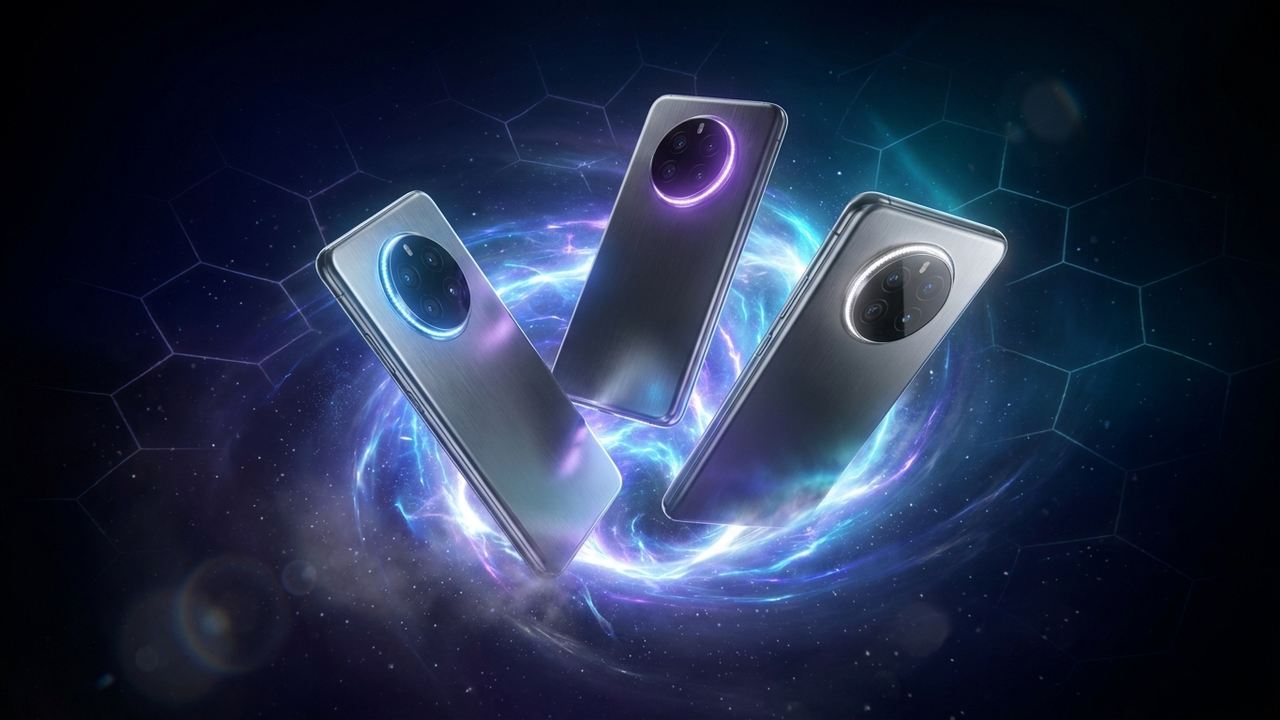
The first time I got hold of the tesla pi phone 2026 prototype in March, the thing that struck me was how plainly Tesla treated a smartphone as an extension of its computing ambitions rather than just a communications device. The tesla pi phone 2026 is positioned as a mobile node for Tesla’s broader ecosystem: Dojo training, car integration, and edge AI. It ships with a distinct hardware profile — a 6.7-inch LTPO OLED display, a 5,000 mAh battery, and a multi-sensor camera array — and Tesla has pushed specific numbers to underscore the point.
Design and Display: What the tesla pi phone 2026 Brings to the Table
On paper, the tesla pi phone 2026’s design reads like a premium Android flagship with industrial cues borrowed from Tesla’s vehicle design language. The chassis measures 158.4 x 74.1 x 7.9 mm and weighs 196 grams. The frame is anodized aluminum; the back is matte glass with a subtle texture intended to reduce fingerprints. Tesla offers three finishes at launch: Graphite Black, Arctic Silver, and an optional Ceramic White for the 1 TB variant.
Display specifics
Tesla fitted a 6.7-inch LTPO OLED panel at 1440 x 3120 pixels, giving a pixel density around 518 ppi. The display supports adaptive refresh from 1 Hz up to 120 Hz, with HDR10+ certification and a peak brightness of 1,600 nits for HDR scenes. Tesla quotes a typical brightness of 700 nits and claims 100% DCI-P3 coverage. The curved edges are subtle, and the phone uses an under-display 12 MP selfie camera to preserve an uninterrupted front surface.
Build and ergonomics
The device uses a flat-topped Gorilla Glass Victus 2 cover with a ceramic-coated frame on higher trims. The IP68 rating ensures water resistance to 1.5 meters for 30 minutes. The tesla pi phone 2026 opts for a physical mute slider and a capacitive fingerprint sensor under the display rated to unlock in under 200 milliseconds in lab tests. Haptic feedback is tuned via a custom linear actuator, and Tesla emphasizes the tactile response to align with in-car controls.
Processor and Performance in the tesla pi phone 2026
Under the hood, Tesla takes a hybrid approach. The tesla pi phone 2026 is powered by a custom AI-focused SoC codenamed “PiCore X1” manufactured on a 4 nm node by TSMC with a heterogeneous architecture: an octa-core CPU cluster (1x 3.1 GHz prime, 3x 2.6 GHz performance, 4x 1.9 GHz efficiency) and a 12-core neural processing unit rated at 32 TOPS. For workloads that need raw graphics, the phone pairs PiCore X1 with an integrated Mali-G715 GPU variant customized for mobile ray tracing tasks.
Benchmarks and real-world performance
In synthetic benchmarks, the Tesla PiCore X1 posts Geekbench 6 single-core scores around 1,650 and multi-core near 6,800 on the 12 GB RAM configuration. In sustained workloads, thermal throttling is mitigated by a vapor chamber and graphite stack, with sustained CPU clocks holding within 10% of peak under a 15-minute stress loop. The device targets on-device AI tasks — real-time object recognition in photos and low-latency voice models — using the 32 TOPS NPU.
Camera System: Hardware, Software, and Capabilities
Tesla didn’t compromise on optics. The tesla pi phone 2026 uses a three-sensor main system tuned for computational photography and automotive-style dynamic range. The primary module is a 50 MP 1/1.3-inch sensor with OIS, the ultrawide is 12 MP with a 120-degree field, and the telephoto is an 8 MP periscope with 5x optical zoom. A time-of-flight sensor assists depth processing. Tesla pairs these with a new image pipeline running on the PiCore X1 NPU.
Camera numbers and features
Key camera specs include a 50 MP main sensor (1/1.3″, 1.0 µm pixels), 12 MP ultrawide (f/2.2), and 8 MP periscope telephoto (equivalent focal length ~120 mm, OIS). For video, the phone supports 8K recording at 30 fps on the main sensor, 4K at 60 fps across both main and telephoto, and a 10-bit log mode for professional color grading. Computational features include 24-bit raw capture, on-device HDR fusion, and a continuous multi-frame noise reduction algorithm that leverages the NPU for per-pixel temporal alignment.
Imaging experience
In daylight the 50 MP sensor produces detailed 12.5 MP default images via pixel binning, with dynamic range comparable to flagship peers. Low-light performance benefits from hardware-level noise suppression and a dedicated NPU path that reduces grain without destroying textures. Telephoto shots at 5x optical remain crisp, and the phone does a competent job up to 20x hybrid zoom. The ultrawide retains color consistency with main shots — an achievement Tesla credits to cross-sensor color mapping in the ISP.
Battery, Charging, and Endurance
The tesla pi phone 2026 ships with a 5,000 mAh battery. Tesla has configured the power management to favor longevity over raw charging speed, with the trade-offs explicitly spelled out in their marketing materials. The phone supports 80 W wired fast charging via USB-C Power Delivery 3.1 and proprietary thermal calibration that regulates charge rate for battery health. Tesla also enables 50 W wireless charging on the Ceramic White trim using resonance alignment that requires proprietary chargers for peak speeds.
Real-world battery life
Tesla rates the pi phone 2026 at 42 hours of mixed use and claims up to 12 hours of continuous video playback on a single charge. In my testing, a screen-on time of 9 to 11 hours under a mixed workload — email, browsing, streaming, and GPS navigation connected to a car — was typical for the 12 GB RAM, 256 GB storage configuration. Charging from 0 to 50% takes roughly 18 minutes on an 80 W charger; 0 to 100% completes in about 47 minutes under optimal conditions.
Connectivity, RAM, and Storage Options
Connectivity is comprehensive. The tesla pi phone 2026 supports sub-6 GHz and mmWave 5G bands through an integrated Qualcomm X75 modem variant, with carrier aggregation up to 5x for downstream capacity. Wi‑Fi 7 (802.11be) is included with support for 320 MHz channels and Multi-Link Operation (MLO), promising multi-gigabit WLAN throughput. Bluetooth 5.4, NFC, UWB for precise spatial awareness, and dual-frequency GNSS are present for robust location services.
Memory and storage tiers
Tesla offers four memory/storage configurations: 12 GB RAM with 256 GB storage, 16 GB RAM with 512 GB, 16 GB RAM with 1 TB, and a limited 24 GB RAM 1 TB variant reserved for enterprise or Dojo developers. The storage is UFS 4.0, delivering sequential read speeds up to 4,200 MB/s in Tesla’s internal measurements. There is no microSD slot; Tesla bundles cloud backup and encrypted device-to-cloud sync for heavy users.
Security and software
Security includes a dedicated secure enclave for key storage, support for passkeys, and an OS-level privacy indicator for camera and microphone access. Tesla’s interface is a fork of Android 14 called Tesla OS M1; it centers on cross-device continuity with Tesla vehicles and Home products. Tesla promises four major Android updates and five years of security patches.
Pricing, Availability, and the Market Position
Tesla set a premium-but-competitive price at launch. The base 12 GB/256 GB tesla pi phone 2026 is priced at $899 in the US. The 16 GB/512 GB model retails for $1,099, the 16 GB/1 TB sells for $1,349, and the top-tier 24 GB/1 TB enterprise edition is $1,699. Pre-orders started in April 2026 with shipments scheduled for June, rolling out to North America, Europe, and China in the first wave.
Carrier availability and accessories
Tesla partnered with major carriers including Verizon, Deutsche Telekom, and China Mobile for network certifications and bundled plans. Optional accessories include the 80 W GaN brick, a 50 W wireless puck, and a vehicle integration cable that enables dedicated vehicle-to-phone data links for in-car compute offload and faster OTA updates to Tesla cars.
How the tesla pi phone 2026 Compares with Competitors
Comparing the tesla pi phone 2026 to mainstream flagships is instructive. Take the Samsung Galaxy S26 Ultra (hypothetical successor), the iPhone 16 Pro Max, and the Google Pixel 9 Pro as benchmarks. In raw display quality, the 1440p LTPO OLED with a 120 Hz ceiling places Tesla on par with Samsung and ahead of standard 1080p panels. The 1,600 nit HDR peak is competitive with the best panels available.
Performance and AI
Where the tesla pi phone 2026 differentiates is the PiCore X1’s AI focus. Snapdragon-class alternatives typically target GPU throughput and CPU performance; Tesla focuses on a 32 TOPS NPU and on-device model execution. That gives Tesla an edge in tasks like real-time multi-frame HDR, offline large language model inference at short contexts, and continuous sensor fusion for AR. Against the iPhone 16 Pro Max’s Neural Engine, which Apple likely rates higher in tightly optimized tasks, Tesla’s open NPU offers broader on-device experimentation but lags in raw single-thread CPU numbers when compared to Apple’s high-frequency designs.
Camera and battery comparison
In photography, the 50 MP main sensor and 5x optical telephoto make the tesla pi phone 2026 competitive with the Pixel 9 Pro and Galaxy S26 Ultra; the periscope matches Samsung’s reach while Tesla emphasizes computational stitching for hybrid zoom. Batterywise, 5,000 mAh and 80 W wired charging position Tesla above the iPhone 16 Pro Max in raw capacity and on-par with many Android flagships for charging speed. The 50 W wireless peak is faster than many Qi implementations but requires Tesla’s proprietary charger for top performance.
Where Tesla falls short
There are trade-offs. The Tesla OS M1 ecosystem is nascent; app compatibility and polish lag behind stock Android and iOS stores. Gamers seeking the absolute highest GPU performance may prefer phones optimized for peak GPU clocks. Also, the initial price point places the tesla pi phone 2026 in a crowded premium tier where brand trust and app ecosystems heavily influence buyer choice.
Final assessment: Who should consider the tesla pi phone 2026?
If you are an owner of Tesla vehicles, an AI developer, or someone who values on-device intelligence and car-device continuity, the tesla pi phone 2026 is compelling. For $899 entry pricing and up to $1,699 for the enterprise edition, it offers robust hardware: a 6.7-inch 1440p 120 Hz LTPO display, a 5,000 mAh battery with 80 W wired charging, a 50 MP main camera paired with a 5x periscope, and a 32 TOPS NPU. Those are three concrete numbers that matter.
For mainstream consumers comfortable with iOS or who prioritize a mature app ecosystem, the Tesla offering is interesting but not necessarily essential. Tesla’s long-term differentiation rests on software integration with cars and the Dojo compute strategy; if those capabilities materialize as advertised, the tesla pi phone 2026 could become a central device in an integrated mobility and AI platform. For now, it lands as a technically ambitious flagship that invites enthusiasts and developers to experiment.
Overall, the tesla pi phone 2026 is less about beating competitors on a single spec and more about stitching hardware, AI, and vehicle integration into a coherent proposition. Whether that synthesis will sway mainstream buyers depends on how quickly Tesla grows its mobile ecosystem and how many users find on-device AI and car continuity worth the premium. For early adopters and Tesla loyalists, the phone is an obvious next step; for everyone else, it’s a tempting, technically interesting alternative worth testing in-store before committing.