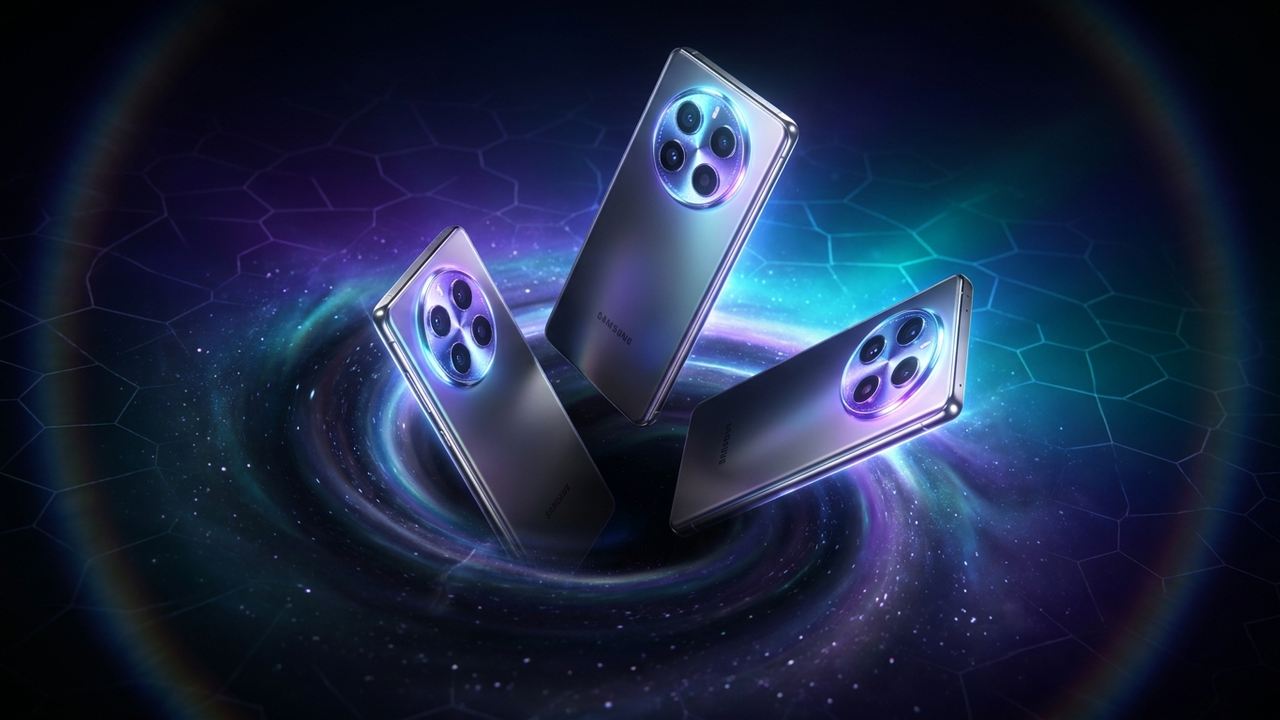
The samsung galaxy s27 ultra arrives in rumor cycles and early leaks as one of the most anticipated Android flagships of the year. Analysts and insiders point to larger displays, multi-sensor camera arrays, and faster charging as the core storylines, and the early picture we can assemble already contains concrete numbers: a display close to 6.9 inches, a 200MP-class main camera sensor, and a 5,000 mAh battery with significantly faster wired charging. This article compiles the most credible details, evaluates expected performance, and places the device in context against current competitors.
Design and display of the samsung galaxy s27 ultra
Samsung’s Ultra line has long been defined by two things: a very large screen and a premium build. The samsung galaxy s27 ultra is expected to continue that trajectory with a 6.9-inch Dynamic AMOLED panel, likely using LTPO backplane technology to enable adaptive refresh from 1Hz up to 120Hz. Resolution figures being discussed in leaks point toward a QHD+ output around 3,200 x 1,440 pixels, delivering a pixel density roughly in the 500–515 ppi range depending on exact measurements.
Brightness, materials and durability
Tipsters consistently cite peak HDR brightness in the 2,500–3,000 nit range for the flagship S-series Ultra — a level that would make the samsung galaxy s27 ultra easier to read in direct sunlight and more capable of HDR highlights. Expect Corning Gorilla Glass Victus 2 or a successor on the front, and an aluminum frame with either a matte or gloss finish on the back. IP68 dust and water resistance will almost certainly return, providing protection to the 1.5m–2m depth range for up to 30 minutes.
Display features worth noting
Important numbers to watch: 6.9-inch diagonal, QHD+ (~1,440p), adaptive 1–120Hz LTPO, and peak HDR brightness around 3,000 nits. Samsung’s color calibration engines and 10-bit color processing would keep the phone competitive for both creators and consumers who demand accurate color and deep blacks.
Performance and chipset in the samsung galaxy s27 ultra
Performance rumors around the samsung galaxy s27 ultra center on a flagship chipset strategy. As is Samsung’s recent pattern, the phone is expected to ship with a Qualcomm Snapdragon flagship in many regions and a Samsung Exynos variant in others. Code names circulating in developer communities point to a forthcoming Qualcomm silicon iteration (successor to the Snapdragon 8 Gen series) tuned for higher sustained GPU performance and a faster modem stack.
CPU, GPU and memory architecture
Leaked kernel trees and trusted supply-chain whispers suggest an octa-core CPU layout with a high-performance prime core clocked near 3.2–3.3 GHz, three high-performance cores around 2.7–3.0 GHz, and four efficiency cores under 2.0 GHz for background tasks. GPU improvements are expected to focus on thermal efficiency and sustained frame rates under long gaming sessions. On the memory side, Samsung will likely pair the chipset with LPDDR5X RAM in 12GB and 16GB configurations; storage options should include UFS 4.0 256GB, 512GB, and a 1TB tier for power users.
Real-world expectations
Given those numbers, the samsung galaxy s27 ultra should be positioned to handle 3D gaming at high refresh rates, editing 4K video on-device, and heavy multitasking without resorting to aggressive background app pruning. If Samsung includes advanced cooling (vapor chamber + graphite stack), thermal throttling will be reduced and benchmark-to-real-world performance gap narrowed.
Camera system: sensors, megapixels, and real-world features
Camera hardware is a headline feature on any Ultra phone, and the samsung galaxy s27 ultra is rumored to push Samsung’s strategy of combining a very high-resolution main sensor with multiple telephoto stages. The most widely circulated numbers show a 200MP main sensor, a 12MP ultra-wide, a 3x telephoto, and a dedicated periscope telephoto with 10x optical capability.
Main sensor and optical technologies
The 200MP number has become a Samsung hallmark since the S22/S23 era. For the samsung galaxy s27 ultra, the successor to Samsung’s ISOCELL module (HP-series or a next-generation variant) is expected to provide large 1/1.3-inch type pixel stacks with advanced pixel-binning to create stable 12MP or 50MP outputs in low light. Optical Image Stabilization (OIS) is present on the main and at least one tele lens; a laser autofocus or dual-pixel AF system is widely expected to reduce hunting and accelerate lock-on times.
Telephoto and periscope details
Two dedicated telephoto cameras give the Ultra line its photographic versatility. Leaks suggest a 3x telephoto with a higher-resolution sensor (30–50MP) for lossless zoom up to 3x and a 10x periscope module that delivers true optical zoom at longer ranges. Conservative numbers put the periscope sensor at 10–12MP, with improvements in image processing allowing meaningful quality from 10x to 30x hybrid zoom and up to 100x digital “Space Zoom” modes with AI sharpening.
Video and software feature set
Video capabilities under discussion include 8K recording at 30–60 fps, 4K at 60–120 fps depending on sensor crop, and advanced stabilization modes for handheld capture. On the software side, expect Pro video modes, RAW capture, improved night modes, director’s view with simultaneous multi-lens recording, and enhanced AI-driven noise reduction. These software systems can be as impactful as hardware changes; hence Samsung’s emphasis on a whole-stack approach.
Battery life and charging: capacity, speeds, and longevity
Battery capacity for the samsung galaxy s27 ultra is expected to remain at 5,000 mAh, a consistent figure across Ultra-class devices that balances weight and longevity. Where the conversation turns is charging: rumors indicate substantial improvements over previous generations with wired charging speculated in the 45W–65W range, wireless charging at 15–50W depending on region and charger availability, and 5–10W reverse wireless charging for accessories.
Charging times and practical battery life
Concrete charging estimates that circulate among teardown specialists put 0–50% times around 20 minutes with a 65W charger and a full charge in approximately 40–50 minutes under optimized conditions. Real-world battery life will of course depend on display brightness, refresh rate usage, and cellular workload; typical everyday usage with a mix of social apps, email, video streaming, and photography should yield between a day and a half to two days for moderate users, and a single heavy-use day (7–9 hours screen-on time) for very active users.
Battery health and longevity
Samsung has integrated battery conditioning software and adaptive charging for years; continuing that approach would aim to preserve charge capacity across 800–1,000 full charge cycles. Fast charging increases stress on cells, so adaptive charging that learns user patterns is essential to mitigate long-term degradation.
Memory, storage, and connectivity (5G, Wi‑Fi, Bluetooth)
The samsung galaxy s27 ultra will likely offer memory and storage tiers to match power users and prosumers. Expected SKU breakdowns include 12GB/256GB, 12GB/512GB, and 16GB/1TB options. UFS 4.0 storage is the anticipated standard for faster read/write performance that benefits application installs, high-bitrate video workflows, and rapid photo offloading.
Cellular and wireless specs
Connectivity numbers to watch: native 5G support with both sub-6 GHz and mmWave where carriers support it; an advanced integrated modem (Snapdragon X-series successor or Exynos equivalent) providing mmWave throughput in the gigabit-per-second class. On Wi‑Fi, Samsung has been moving to support Wi‑Fi 6E and there are credible suggestions that the s27 Ultra could ship with Wi‑Fi 7 support in selected markets — though that will depend on chipset availability and regulatory certification. Bluetooth 5.3 or newer, NFC, dual-frequency GPS (L1 + L5), and possibly Ultra Wideband (UWB) for precise spatial features are all reasonable expectations.
Ports, expansion, and audio
Physical connectivity will almost certainly include a USB-C 3.x port for data and fast charging. MicroSD expansion has been absent from recent Samsung flagships and is unlikely to return in the Ultra line. Stereo speakers tuned with AKG or Samsung’s audio team and robust ANC on bundled or optional earbuds are market expectations.
Pricing, launch timing, and how the samsung galaxy s27 ultra stacks up against competitors
When it comes to price, Samsung’s Ultra models have historically launched at a premium. Early estimates place the base configuration for the samsung galaxy s27 ultra at around $1,199–$1,299 for the 256GB model, with 512GB at approximately $1,399 and 1TB at $1,599. Carrier subsidies, trade-in offers, and regional tax differences will push street pricing lower for many buyers.
Launch window and availability
Based on Samsung’s cadence, a first-quarter flagship unveiling or an early-year Galaxy Unpacked event is the most likely launch scenario. Availability typically follows global rollouts with the United States, South Korea, and major European markets getting stock first, and rollouts to other regions arriving within weeks.
Competition: iPhone, Pixel, and Chinese flagships
How the samsung galaxy s27 ultra compares stands on three pillars: display and innovation, camera versatility, and ecosystem integration.
Apple’s iPhone 15 Pro Max (and any successors such as the iPhone 16 Pro Max) remain the principal competitor. Apple’s strengths are system-level optimization, long-term software updates, and a silicon/OS pairing that extracts consistently high real-world performance from smaller batteries. Compared to an iPhone with a 6.7-inch OLED and Apple’s A-series silicon, the s27 Ultra touts a larger 6.9-inch panel, a more flexible camera array with periscope zoom, and higher-resolution main sensors. Pricing parity or a small premium for top configurations is typical: where Apple might price a top-tier iPhone at $1,199–$1,399, Samsung’s 1TB Ultra SKU could push $1,499 or higher depending on configuration.
Google’s Pixel line, exemplified by the Pixel 8 Pro and its successors, competes on camera processing and AI. The Pixel’s computational photography remains strong for single-shot quality and low-light performance. The s27 Ultra’s hardware advantage — multiple optical zoom stages, a 200MP sensor, and larger battery capacity — targets users who want broader photographic coverage and extended battery life.
Chinese rivals like Xiaomi and OnePlus (Xiaomi 14 Ultra, OnePlus flagship models) often match or beat Samsung on raw charging speeds and competitive pricing. Xiaomi has pushed 120W+ wired charging in past phones and sometimes higher wireless rates. Samsung’s strengths are software features, enterprise-level Knox security, and global carrier support; rivals typically compete on value and aggressive charging/spec lists.
Who should buy it?
If the samsung galaxy s27 ultra’s rumored spec sheet is accurate, it will be best suited for power users who prioritize display quality, camera versatility (multiple focal lengths and high-resolution sensors), and a robust ecosystem that includes DeX and Samsung’s productivity features. Photographers who want a single pocketable device to cover everything from ultra-wide landscapes to long-range telephoto shots will find the periscope + 3x tele combination especially compelling.
Final thoughts: what to expect and what to verify at launch
Rumors paint the samsung galaxy s27 ultra as an incremental but meaningful evolution: a slightly larger, brighter display; a refined camera stack anchored by a 200MP sensor and a real periscope telephoto; 5,000 mAh battery with faster charging; and flagship-tier performance with 12–16GB RAM and UFS 4.0 storage. The critical verification points at launch will be sustained performance under load (thermal management), real-world camera results at 3x and 10x zoom, and actual charging times under certified chargers.
As with every flagship cycle, final software polish and regional chipset choices will shape the user experience. If Samsung balances hardware upgrades with tangible software improvements—better image processing, power-efficient display algorithms, and improved battery conditioning—the samsung galaxy s27 ultra could very well be the Android flagship to beat. Watch for the official Galaxy Unpacked announcement for confirmed specs, pricing, and hands-on demos that will settle the remaining questions.